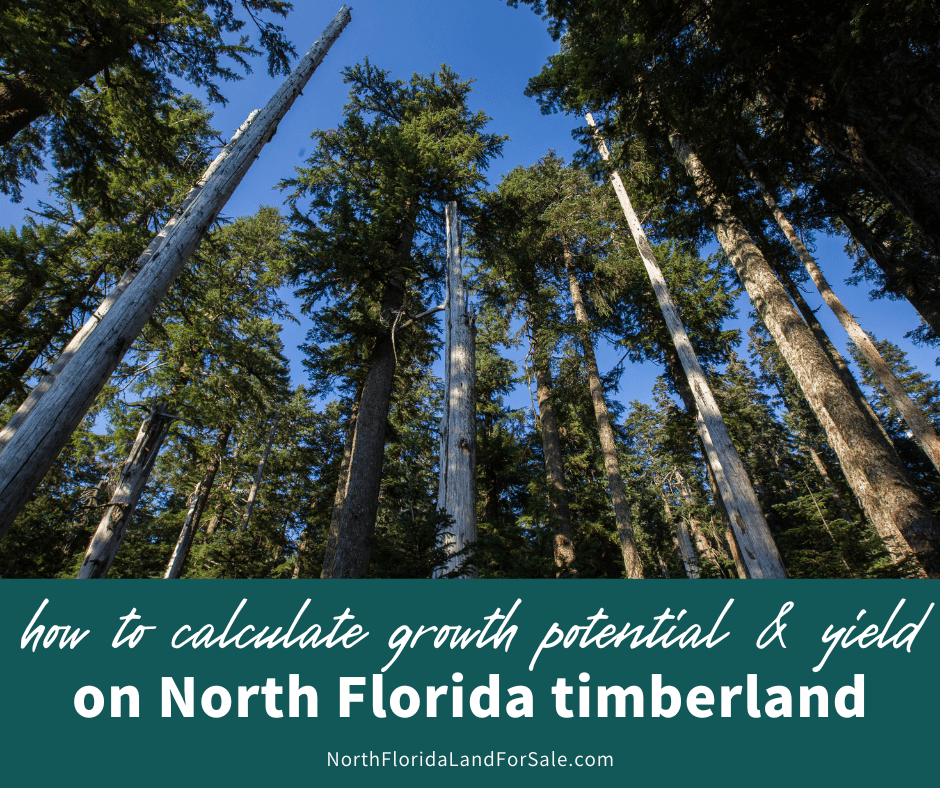
If you own timberland in North Florida—or you’re thinking about buying some—you’ve probably wondered: How much wood will this land grow, and how much could it be worth in the future? This isn’t about guesswork. With a little observation, a few measurements, and a basic plan, you can make a solid estimate without getting lost in complicated forestry formulas.
Step 1: Know Your Land
The first step is figuring out how good your land is for growing trees. Different spots grow trees at different speeds, depending on the soil, moisture, and sunlight. Around Lake City, for example, sandy soils that drain well tend to grow faster than swampy spots that stay soggy in summer.
A quick way to judge the “quality” of your site is to look at tall, healthy trees in the area and ask how old they are. If the tallest pines are already 60–70 feet tall by age 25, you’re on productive land. If they’re much shorter at that age, growth will be slower.
You can also check the UF/IFAS Extension website for local soil maps and guides that explain how well different soils grow pine in Florida.
Step 2: See What You’ve Got Now
Next, you need to know what’s already on the land. Walk through and look for:
Tree type — pine species grow at different speeds. Loblolly and slash pine grow faster here than longleaf pine, though longleaf is tougher in storms.
Tree size — measure a few trunks about chest height and see how thick they are. Bigger trees mean you’re closer to higher-value logs.
Tree spacing — tightly packed trees may need thinning to keep growing well.
You don’t have to measure every tree. Just get an average feel for size, spacing, and health.
Step 3: Look at the Past and Plan the Future
Trees grow differently depending on how they’ve been cared for so far. Were they planted in neat rows? Was the land cleared and prepped before planting? Have they ever been thinned?
If the stand has never been thinned and the trees are starting to crowd each other, removing some can give the rest more room and speed up growth. In North Florida, most pine plantations get thinned for the first time between 12 and 16 years old, and sometimes again a few years later.
Step 4: Think About What You’ll Sell
Not all timber is worth the same. Smaller trees usually go for pulpwood (used in paper), which pays less. As trees get bigger, they can be sold for “chip-n-saw” or sawtimber, which bring in more money.
The key is to grow your trees into those higher-value sizes before the final harvest. Thinning at the right time helps the best trees get bigger faster, so more of them reach the top-paying category.
Step 5: Estimate Growth in Simple Terms
A healthy pine stand in North Florida can add about 3 to 5 tons of wood per acre each year once it’s established. That’s a ballpark figure—better soils, better seedlings, and good care can push it higher.
For example, if you have 50 acres and your land averages 4 tons per acre per year, that’s about 200 tons of new growth every year. You won’t cut every year, but over time that growth adds up until the harvest.
Step 6: Plan Harvest Timing
Most pine plantations here are cut for the final harvest between 25 and 30 years old (loblolly/slash) or a bit longer for longleaf. In the meantime, thinnings give you some income earlier and keep your final crop healthy.
A common plan:
Thin once in the early to mid-teens to remove crowded, weaker trees (mostly pulpwood).
Thin again a few years later for mid-sized logs (chip-n-saw).
Clear-cut at the end for the big sawtimber logs.
This staged approach brings in money at multiple points and gets more of your final harvest into the higher-value products.
Step 7: Remember Risks and Extra Income
Storms, wildfire, and pests like pine beetles can all hit your returns. Things you can do: keep firebreaks in place, maintain access roads, and manage crowded stands.
Some landowners also make extra income by leasing land for hunting, selling pine straw, or opening it for recreational use—this can help cover costs while the timber grows.
The U.S. Forest Service has guides on how to manage forests for both income and wildlife habitat, which can help if you want to combine timber growing with other uses.
Step 8: Putting It All Together
Here’s a basic example:
You have 40 acres of loblolly pine planted 10 years ago. The trees are healthy and well-spaced. You estimate they’ll be ready for a first thinning in 4–5 years. With decent soils, you figure growth at about 4 tons per acre per year.
By age 15, you could thin out about a third of the trees for pulpwood, giving the rest room to grow. The remaining trees keep adding volume, with more moving into the valuable sawtimber category by the final harvest at age 27–28.
Between the two thinnings and the final cut, you’ll have earned income three times, with the biggest check coming at the end.
The Bottom Line
You don’t need a forestry degree to get a good idea of your land’s timber potential. Just:
Judge your site quality (soil, tree height, growth rate).
See what you have now (species, size, spacing).
Plan your care (thinnings, weed control, maybe fertilization).
Focus on growing bigger, higher-value logs.
Do those things, keep an eye out for risks, and your North Florida timberland can be both a steady investment and a living, growing asset.
Buy or Sell Land in North Florida with Leonard Dicks Realty
If you’re thinking about buying or selling land in North Florida, contact Leonard Dicks Realty — your trusted local expert for rural, agricultural, and residential acreage. Leonard Dicks is the top real estate agent specializing in North Florida land, known for his deep knowledge of the area, hands-on experience, and dedication to helping clients achieve their property goals.
Explore some of the most popular searches below to find the perfect North Florida property:
- Land for Sale North Florida
- Small Farm for Sale in Florida
- Ranches for Sale in North Florida
- Land for Sale in North Central Florida
- North Florida Homes for Sale with Acreage
- 5 Acres of Land for Sale in Florida
- 100 Acres for Sale in Florida
- Waterfront Land for Sale Florida
- Ranch Homes for Sale in Florida
Whether you’re looking to invest, build, or relocate, Leonard Dicks Realty is here to guide you every step of the way.