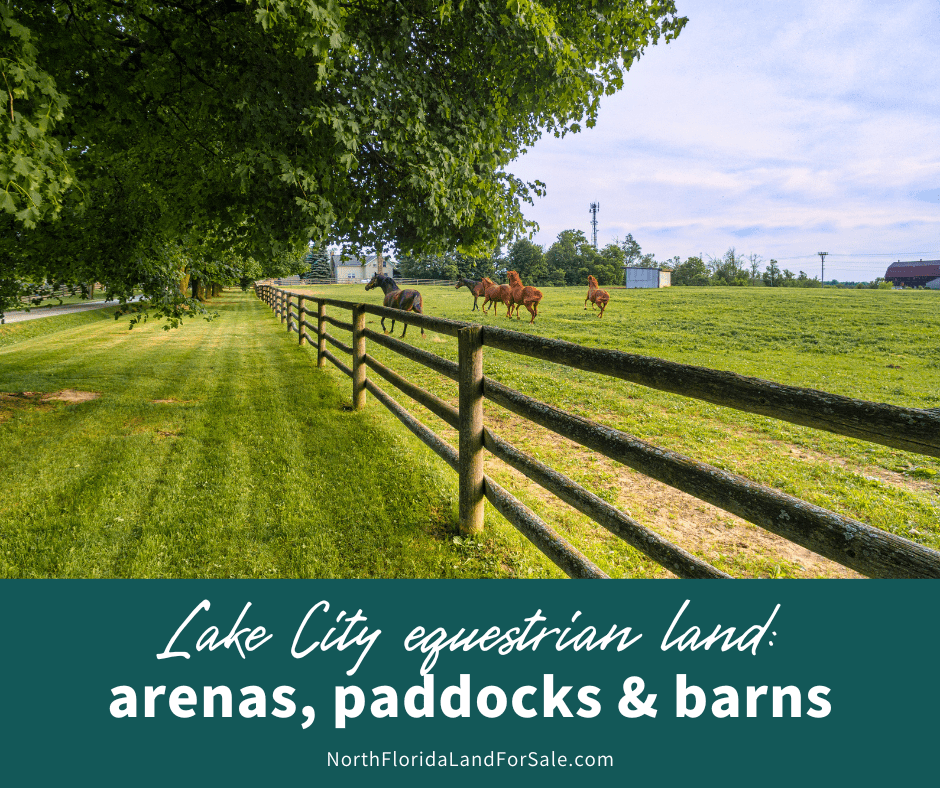
Lake City, Florida, with its mild winters, fertile soils, and affordable acreage, has become a haven for equestrian enthusiasts. Whether your dream is a small private horse farm or a full boarding and training facility, a well-designed property makes the difference between a functional operation and a daily struggle. Arenas, paddocks, and barns are the core elements of any equestrian setup, and in Columbia County, thoughtful planning can ensure they work seamlessly together.
Understanding Your Site Before Building
Every equestrian property starts with the land. Topography, drainage, soil type, and prevailing winds all play a role in how and where to place your structures and riding areas. A site walk after heavy rain can tell you where water naturally flows, helping you avoid placing barns or arenas in low-lying spots that stay wet.
The Natural Resources Conservation Service’s soil survey can help you understand whether your acreage is better suited for pasture, building, or riding surfaces.
Access and Layout
Separate entrances for visitors and service vehicles: Keeps horse areas calmer and cleaner.
Drive-through barn aisles: Useful for loading hay, shavings, and feed.
Clear sightlines: Position paddocks and arenas so they can be viewed from the barn or house.
Planning the Arena
Your arena is the heart of daily riding and training. In Lake City’s climate, both outdoor and covered arenas are common. Covered arenas offer shade and weather protection without fully enclosing the space, which is ideal for airflow.
Sizing and Orientation
Dressage: 20×60 meters (66×197 feet) for standard competition.
Jumping: 100×200 feet or larger for course work.
Western and multipurpose: 120×240 feet allows versatility.
Position the arena to avoid glare from the rising or setting sun, and align it with the natural slope to aid drainage.
Footing and Base
Investing in a proper base—compacted and layered—is crucial for safety and performance. In North Florida, a blend of sand and clay may need additional materials like angular sand or geotextiles to maintain consistency in wet and dry seasons.
Designing Paddocks for Horse Health
Horses thrive with space to move, graze, and socialize. Paddock size will depend on your acreage and stocking density, but a common standard is 1–2 acres per horse for rotational grazing.
Placement and Rotation
Place paddocks so they share fencelines with the barn for easy turnout. Rotational grazing—moving horses between paddocks—prevents overgrazing, reduces parasite loads, and keeps pastures healthier. The University of Florida IFAS Extension offers pasture management resources tailored to Florida’s growing conditions and forage species.
Fencing Considerations
Safety first: Avoid barbed wire; opt for board fencing, no-climb mesh, or electro-braid.
Visibility: Horses should easily see the fence line to avoid collisions.
Durability: Materials must withstand both Florida humidity and horse wear-and-tear.
Barn Design That Works for You and Your Horses
The barn is more than shelter—it’s your operational hub. Good ventilation, natural light, and efficient workflow save time and keep horses healthier.
Barn Style Options
Center-aisle barns: Enclosed sides for year-round use; good weather protection.
Shed-row barns: Open-air design with stalls in a line; great for airflow in hot months.
Run-in sheds: Low-maintenance shelters in paddocks for 24/7 turnout situations.
Stall Sizing and Layout
Standard stall size: 12×12 feet for most breeds.
Aisle width: 12–14 feet to allow horses to pass comfortably and accommodate equipment.
Tack and feed rooms: Enclose and climate-control to protect leather and grain from Florida humidity.
Integrating All Three Elements
When arenas, paddocks, and barns are planned together, your property becomes safer and easier to manage.
Flow: Horses should move from barn to paddock to arena without crossing vehicle paths.
Utilities: Water and electricity should reach all major areas, with frost-free hydrants and well-lit spaces.
Drainage: All structures should sit on higher ground with graded slopes leading water away from working areas.
Considering Expansion and Resale
Even if you start small, leave room for future additions like a second arena, more paddocks, or extra stalls. Buyers in the Lake City area often value expansion potential, especially if your property is already equipped with quality infrastructure.
The Bottom Line
A Lake City equestrian property planned with purpose can offer years of enjoyment and strong resale potential. By understanding your site, investing in safe and functional arenas, paddocks, and barns, and designing for efficient movement and care, you’ll create a facility that works as well for your horses as it does for you.
With its affordable land, supportive agricultural community, and access to quality resources, Columbia County is one of Florida’s best-kept equestrian secrets—until now.
Buy or Sell Land in North Florida with Leonard Dicks Realty
If you’re thinking about buying or selling land in North Florida, contact Leonard Dicks Realty — your trusted local expert for rural, agricultural, and residential acreage. Leonard Dicks is the top real estate agent specializing in North Florida land, known for his deep knowledge of the area, hands-on experience, and dedication to helping clients achieve their property goals.
Explore some of the most popular searches below to find the perfect North Florida property:
- Land for Sale North Florida
- Small Farm for Sale in Florida
- Ranches for Sale in North Florida
- Land for Sale in North Central Florida
- North Florida Homes for Sale with Acreage
- 5 Acres of Land for Sale in Florida
- 100 Acres for Sale in Florida
- Waterfront Land for Sale Florida
- Ranch Homes for Sale in Florida
Whether you’re looking to invest, build, or relocate, Leonard Dicks Realty is here to guide you every step of the way.