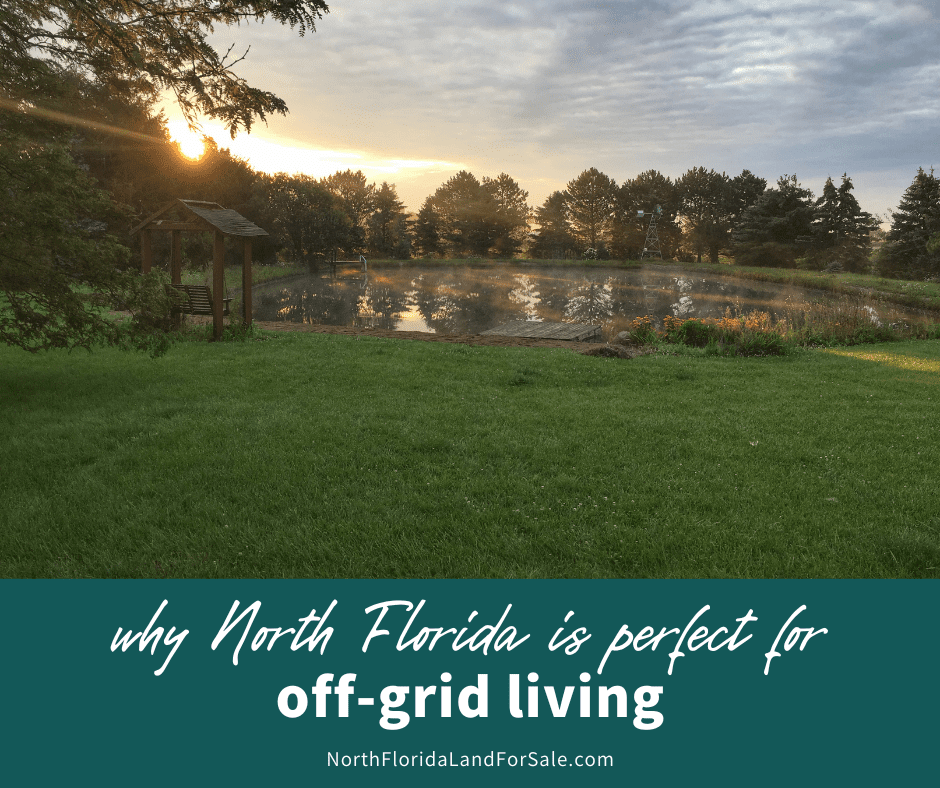
North Florida offers a unique combination of natural resources, climate, and affordable land that make it an ideal location for off-grid living. Whether you’re looking to live self-sufficiently or reduce your dependence on utilities, North Florida provides the conditions needed for a successful off-grid lifestyle. Here’s why North Florida stands out for going off the grid:
1. Affordable Land Prices and Large Acreage Options
One of the biggest advantages of North Florida for off-grid living is the affordability of land. Compared to more developed parts of Florida, North Florida offers larger parcels at reasonable prices, making it easier to set up a self-sustaining property with room for solar panels, gardens, water collection systems, and other off-grid essentials. Affordable land also means there’s room to create privacy buffers with natural vegetation and woodlands, reducing your need to rely on external resources or neighbors.
The Florida Department of Revenue provides information on property taxes and any exemptions available to landowners, including agricultural exemptions that can help reduce costs on larger parcels used for farming or conservation. Additionally, the Florida Department of Agriculture and Consumer Services (FDACS) has resources on land use programs that can benefit homesteaders and off-grid property owners.
2. Abundant Solar and Water Resources
North Florida’s sunny climate makes solar energy a viable option for powering an off-grid home, reducing the need for costly and less sustainable fuel-based generators. Solar panels can generate reliable energy year-round, given the region’s consistent sunshine, especially during spring and summer months. With ample solar power, you can reduce or eliminate dependence on traditional utilities.
For water resources, North Florida is home to numerous natural springs, rivers, and freshwater lakes. Many properties also offer options for installing wells, which are essential for off-grid water access. The Florida Department of Environmental Protection (DEP) provides guidelines on well construction and water quality testing, ensuring you have a safe and consistent water supply. Rainwater harvesting systems are another popular choice, and Florida’s relatively high annual rainfall means that these systems can provide ample water for daily use and irrigation.
3. Fertile Soil for Self-Sustaining Agriculture
North Florida’s fertile soil makes it easier to grow a variety of crops, allowing for self-sustaining food production. The region’s soil, especially in areas like Suwannee and Madison counties, is well-suited for homesteading and organic gardening, supporting a wide range of vegetables, fruits, and grains. Off-grid residents can cultivate food for personal consumption or to trade with nearby communities.
The Natural Resources Conservation Service (NRCS) provides detailed soil surveys and resources for sustainable land management, which are particularly useful for off-grid homesteaders who aim to rely on natural soil fertility and avoid heavy fertilizers or chemical inputs. With the right approach, you can create a productive and resilient garden that provides year-round nutrition.
4. Flexible Zoning and Support for Self-Sufficiency
Zoning laws in North Florida are often more flexible than in urban areas, providing more freedom for off-grid developments, such as alternative housing types, sustainable agriculture, and energy installations. Rural zoning in many North Florida counties allows for practices like small-scale farming, livestock keeping, and limited structures without the restrictive regulations common in other areas.
Working with local planning departments or reviewing the county’s land use codes can help you determine the zoning requirements for off-grid setups. In addition, Florida offers homestead exemptions that can reduce property taxes for primary residences, even off-grid ones, which makes this region more financially sustainable for those interested in minimal-cost living.
5. Supportive Off-Grid and Homesteading Community
North Florida has an established community of homesteaders and off-grid enthusiasts who share resources, knowledge, and support networks. Local farmers’ markets, community-supported agriculture programs, and homesteading organizations offer great opportunities to connect with like-minded individuals. These communities often engage in skills exchanges, bulk purchasing of supplies, and workshops on topics such as permaculture, alternative energy systems, and self-reliance.
Organizations like the UF/IFAS Extension offer educational resources, from sustainable farming techniques to forestry management, providing invaluable support to those looking to live off the grid. Local homesteading groups and co-ops are also excellent ways to build a support network, gain insights from others, and exchange or sell surplus products from your land.
North Florida’s combination of affordable land, abundant natural resources, and a strong community support system make it an ideal choice for off-grid living. With the right planning, you can establish a sustainable and self-sufficient lifestyle in one of the most accommodating regions of the state.
Are You Buying a Home or Land for Sale in Lake City?
If you’re moving to Lake City, we can help you find the perfect place to live. Call us at 386-243-0124 to tell us what you want from your home and we will begin searching right away.
Check these out:
- Land for Sale North Florida
- Small Farm for Sale in Florida
- Ranches for Sale in North Florida
- Land for Sale in North Central Florida
- North Florida Homes for Sale with Acreage
- 5 Acres of Land for Sale in Florida
- 100 Acres for Sale in Florida
- Waterfront Land for Sale Florida